Measurement Guide
Body Measurements
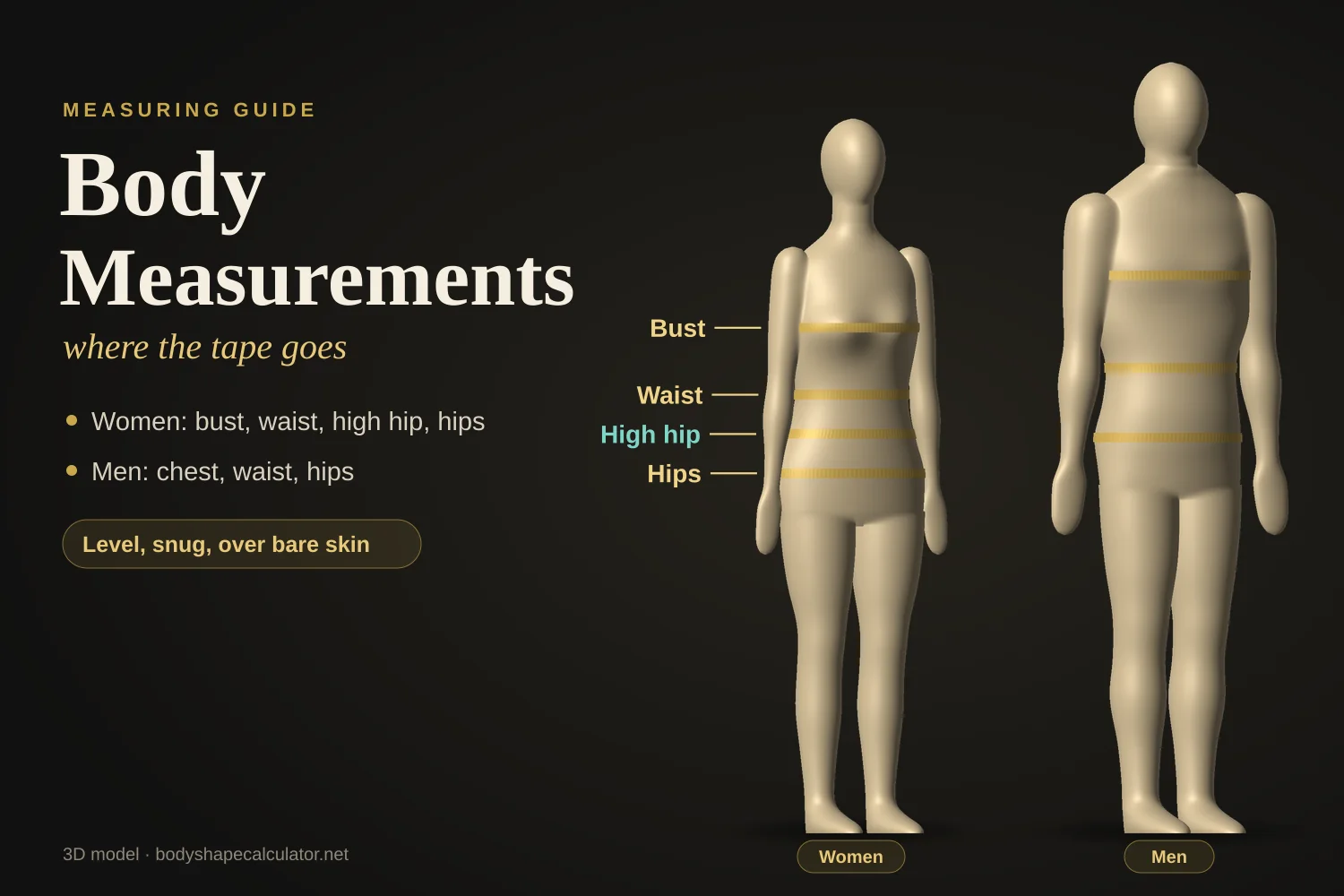
How to accurately measure bust, chest, waist, high hip, hips and height at home — the exact technique behind every calculator on this site.
Why Accurate Measurements Matter
Every result from a body type calculator, waist-to-hip ratio, or waist-to-height ratio calculator is only as good as the numbers you put in. A measurement that's off by an inch — a common outcome of a loose tape, poor posture, or measuring over bulky clothing — can shift a result into the wrong category entirely, especially near a boundary. The technique matters as much as the tape itself. Once you have your numbers, you can also see them as a rotatable 3D model in our body visualizer, a quick way to spot a measurement that looks off. To turn your numbers into ratios, run them through our body proportions calculator.
What You'll Need
- A flexible fabric tape measure — the soft kind used for sewing, not a rigid metal one. A metal tape can't follow the curve of your body accurately.
- A mirror, ideally full-length, to check the tape stays level at the back where you can't see directly.
- A second person, if possible. Self-measuring at the back — waist and hips especially — is where most errors creep in.
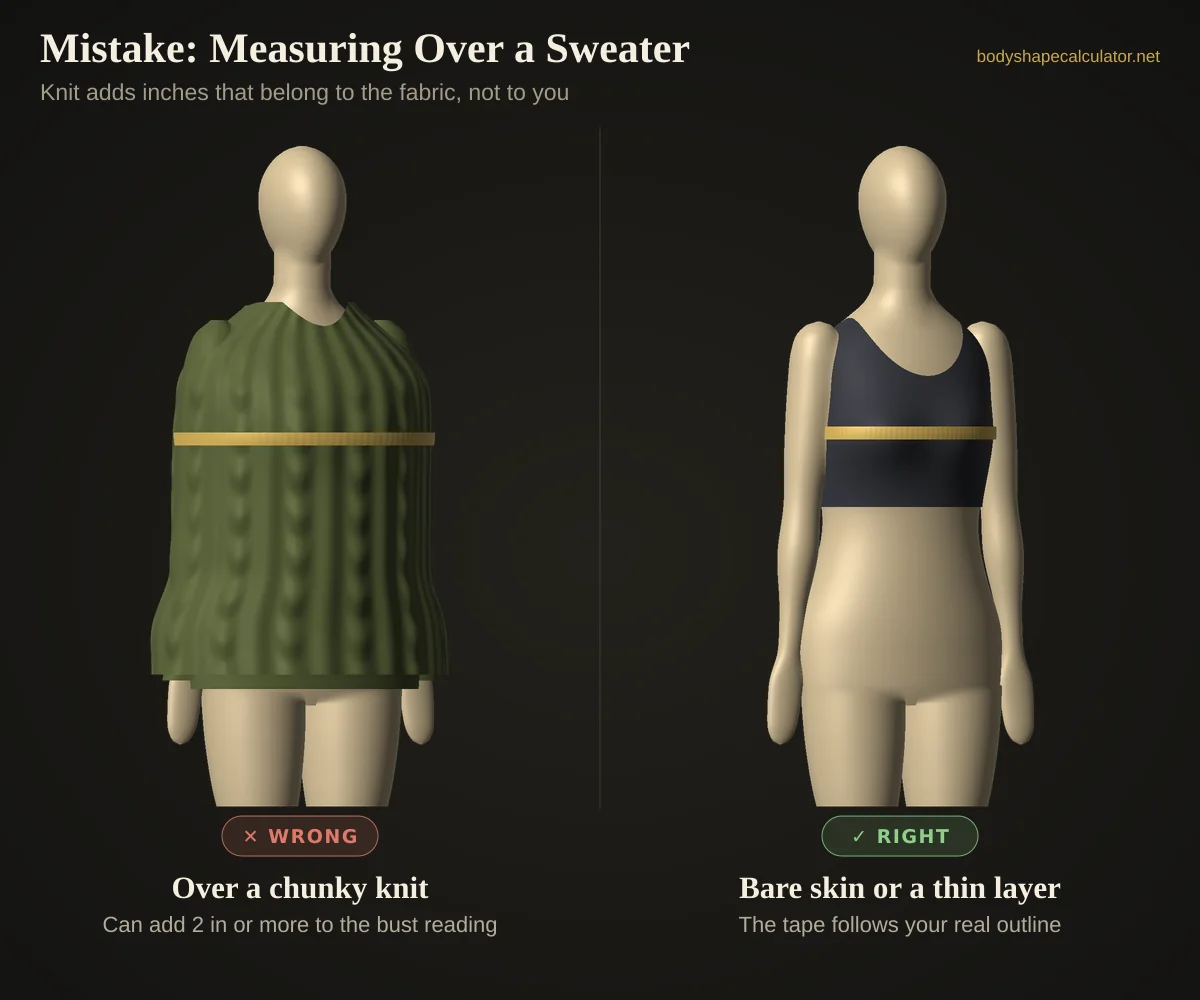
- Minimal, form-fitting clothing, or bare skin. Bulky fabric adds inches that aren't really there.
Measure twice, use the average. If your two readings differ by more than half an inch, take a third and use the middle value rather than either extreme.
How to Measure Bust (Women)
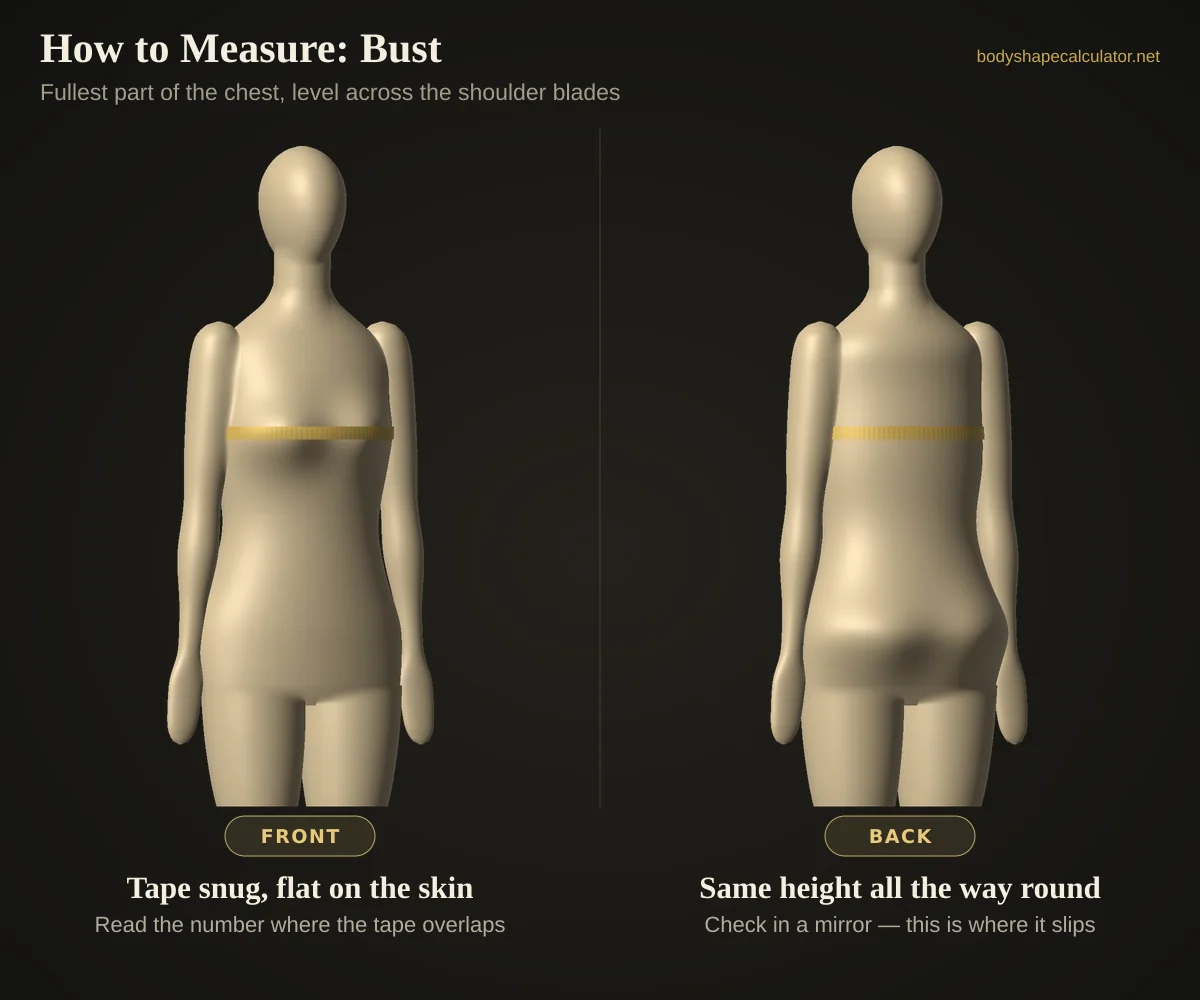
Wrap the tape around the fullest part of your chest, usually across the nipple line. Keep it level front to back — it's easy to let it ride up slightly at the back without noticing, which is why a mirror or a second person helps here specifically. If you're measuring in a bra, use a properly fitted, non-padded one for a consistent baseline. Keep the tape snug against the skin without compressing anything, breathe naturally, and read the number where the tape overlaps.
How to Measure Chest (Men)
Wrap the tape around the fullest part of your chest, under the arms and across the shoulder blades. Keep it level and snug without pulling tight, and avoid the instinct to puff your chest out — you want your natural resting measurement, not your biggest possible one.
How to Measure Waist
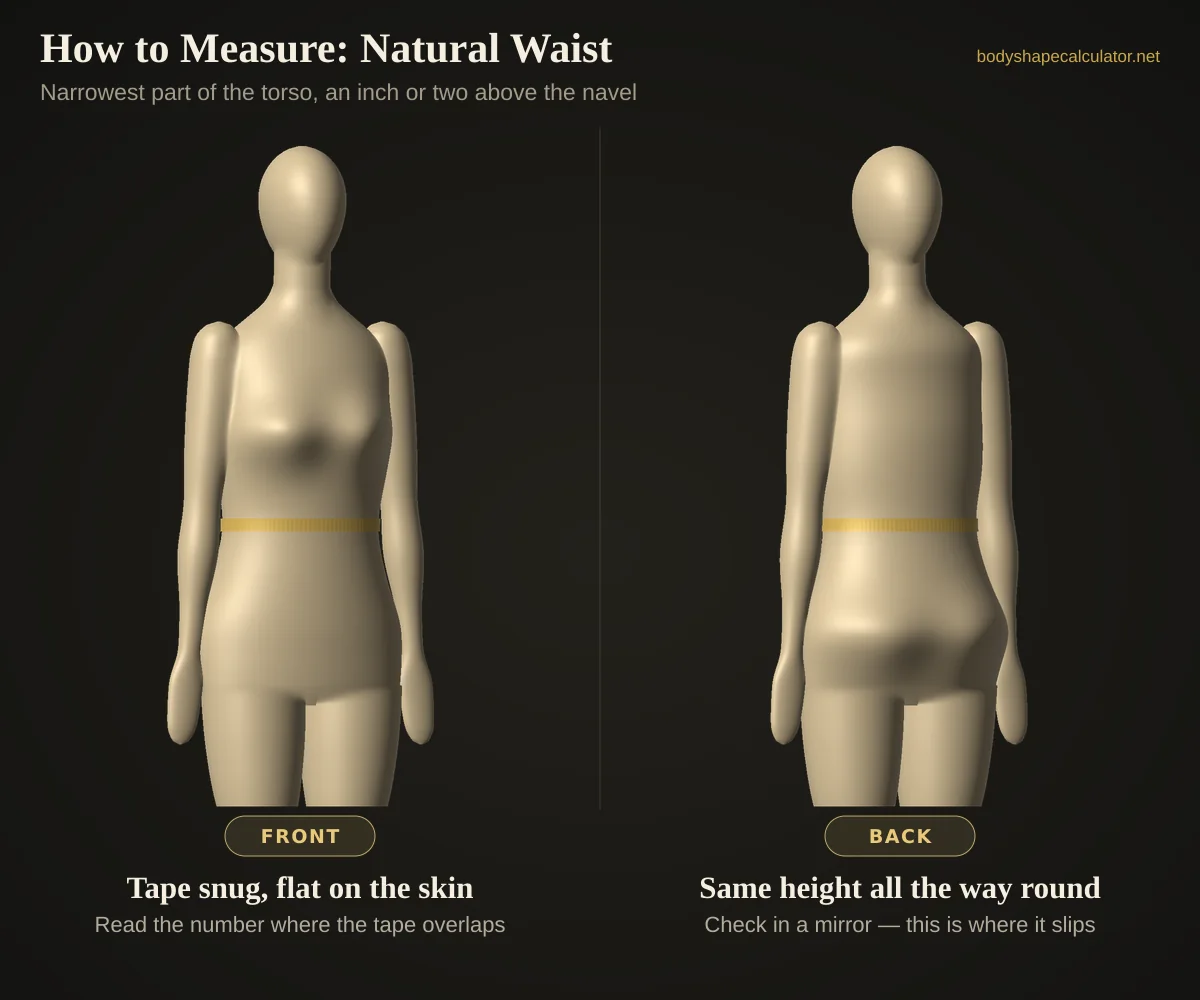
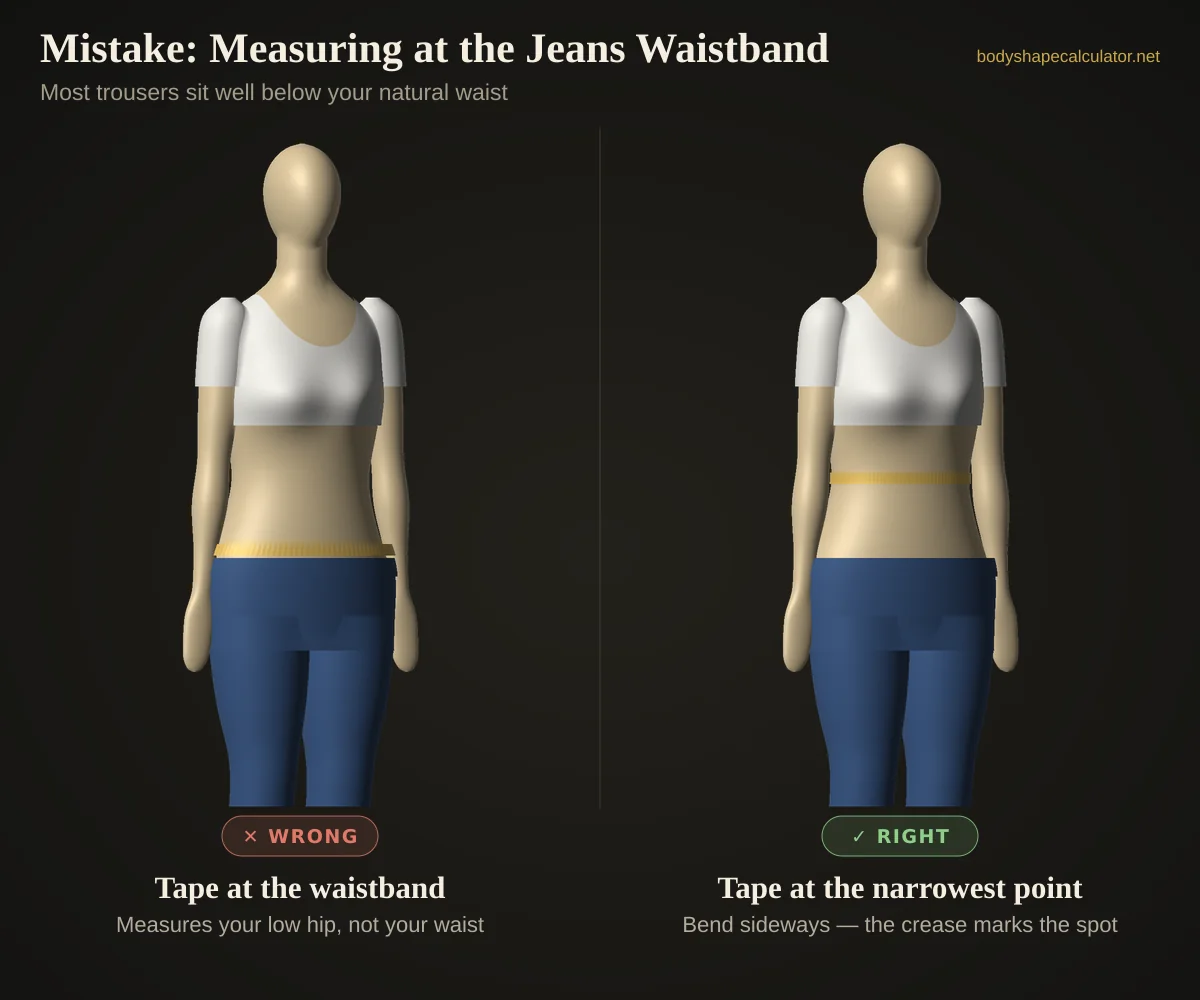
Your natural waist is the narrowest part of your torso — usually an inch or two above the belly button, not at it. That mix-up is the single most common measuring mistake. Not sure where yours is? Bend sideways; the crease that forms is the spot. Exhale gently and measure your relaxed shape — don't suck in or hold your breath, and keep the tape parallel to the floor.
Checking a clinical or WHO-based reference instead? The World Health Organization's own protocol uses a slightly different landmark — midway between your lowest rib and the top of your hip bone — rather than the narrowest point described above. It matters specifically for waist-to-hip ratio results, since those health thresholds are sourced from WHO guidance built around that landmark (see the WHR calculator link below).
How to Measure High Hip
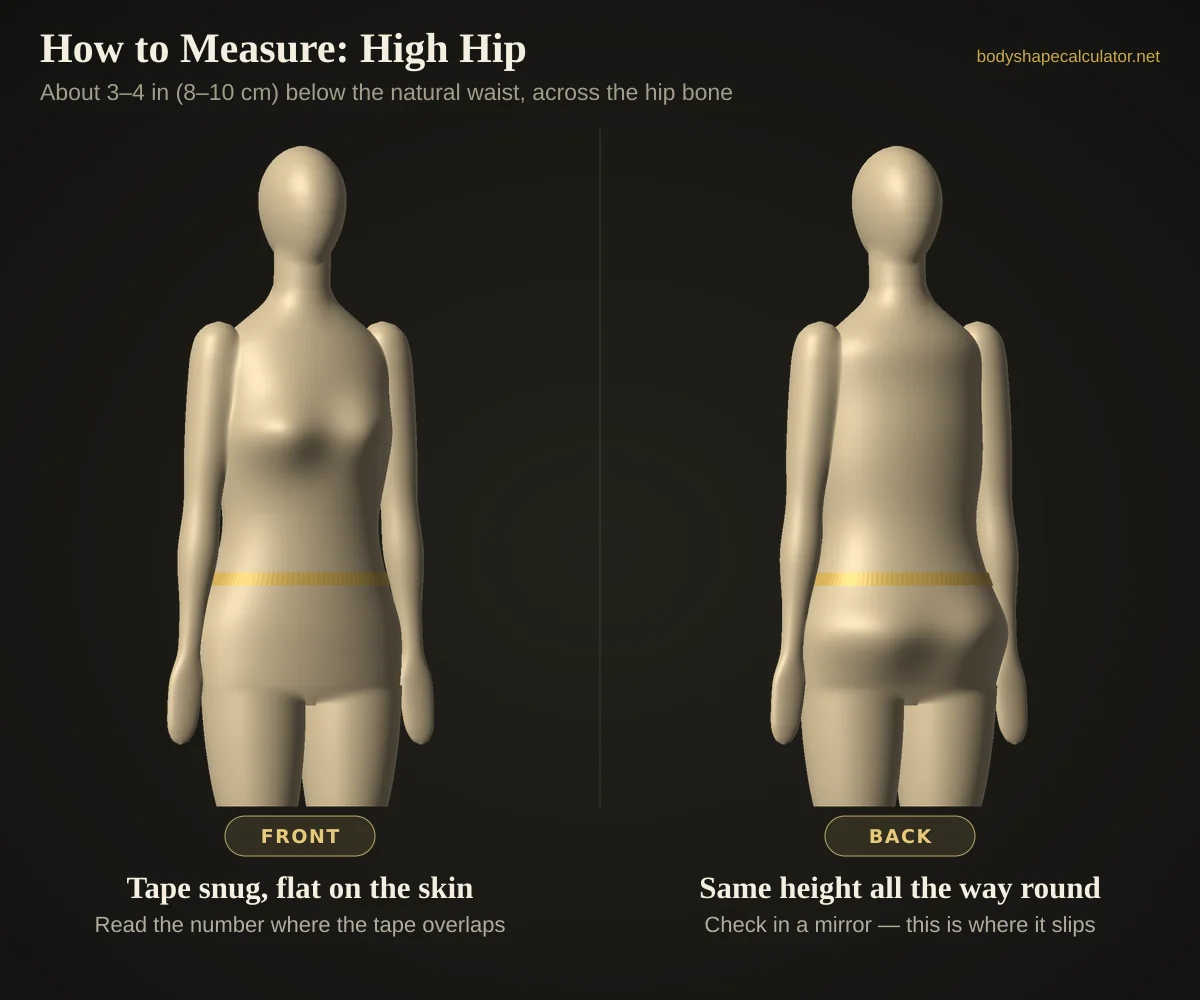
The high hip sits roughly 3 to 4 inches (8–10 cm) below your natural waist, across the top of the pelvic bone — the widest point of the upper hip area, distinct from the full hip below. Most general-purpose calculators skip this measurement entirely, but it's a useful extra data point for spotting a pronounced "shelf" shape at the top of the hip that a bust/waist/hip reading alone can miss — the pattern some calculators label spoon. Wrap the tape at that point, keep it level, and record it separately from your full hip number.
How to Measure Hips
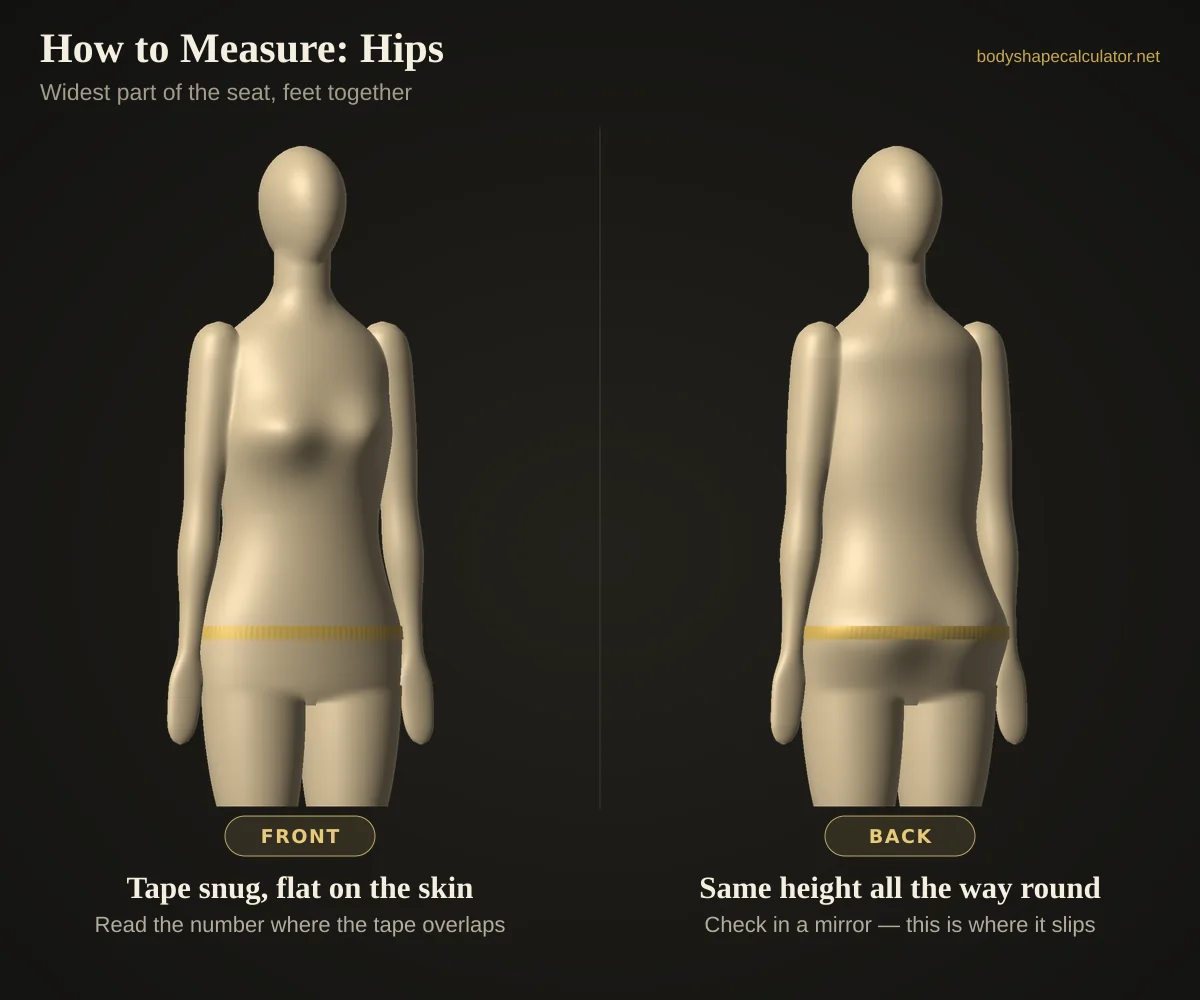
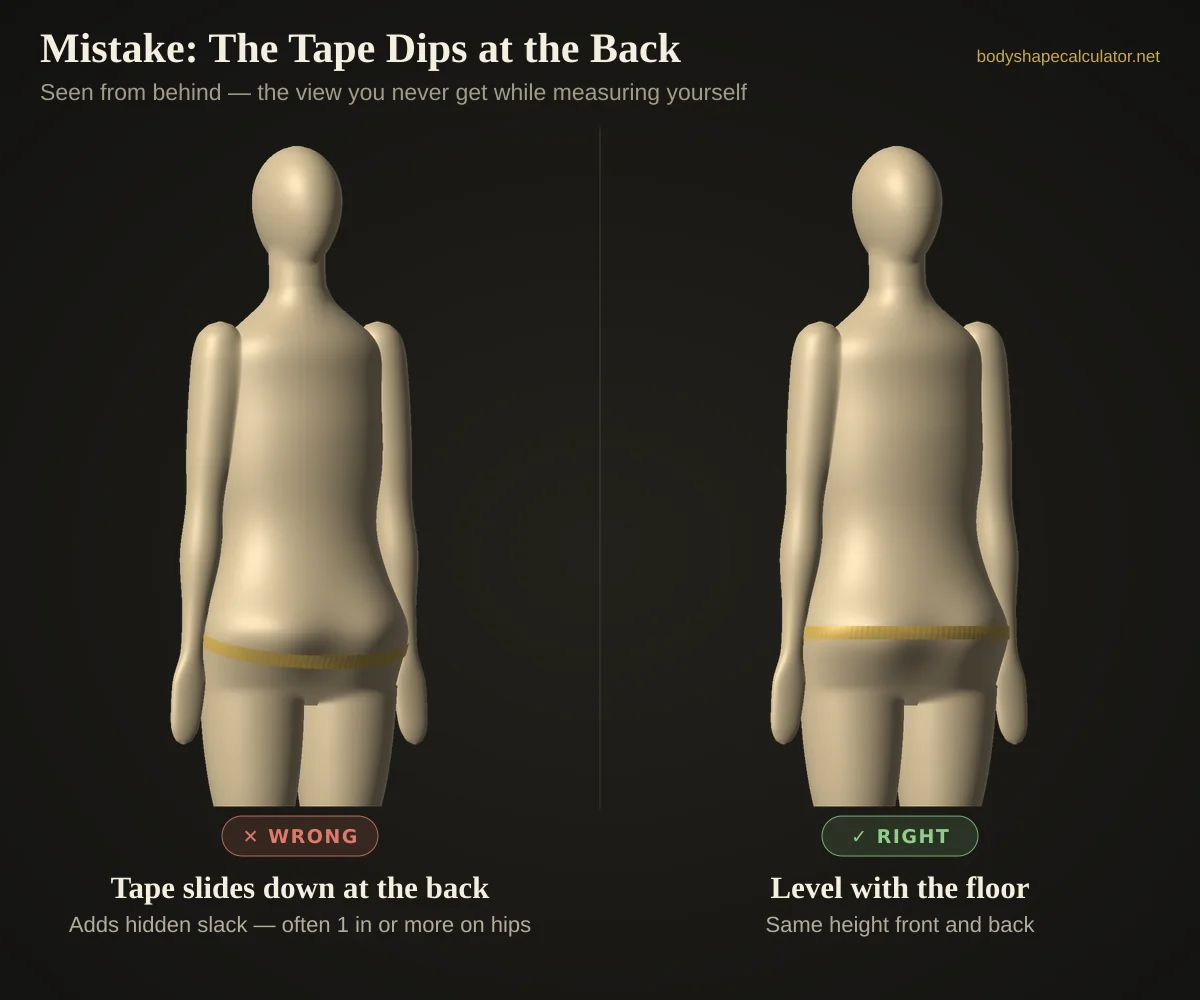
Stand with your feet together and wrap the tape around the widest part of your buttocks and hips — typically 7 to 9 inches below the natural waist, though this varies by frame. Keep the tape level all the way around; check in a mirror that it doesn't dip lower at the back, which is the most common way this measurement goes wrong.
How to Measure Height
Stand fully upright against a flat wall with no shoes on, heels touching the wall, and look straight ahead rather than tilting your chin up or down. A book or ruler placed flat on your head, marked against the wall, gives a more accurate reading than eyeballing a bathroom-scale height gauge — those tend to run off by half an inch or more.
Common Measuring Mistakes
- Measuring over bulky clothing. A sweater or jeans waistband can add an inch or more. Measure over bare skin or thin, form-fitting clothing.
- Sucking in or holding your breath. This gives you your smallest possible waist, not your actual resting measurement — and it's not repeatable, so your next measurement won't match.
- Letting the tape dip at the back. Waist and hip measurements are the most common victims of this, since you can't see the back of the tape directly. A mirror or a second person fixes it.
- Confusing your waistband with your natural waist. Jeans and trousers usually sit lower than your actual narrowest point.
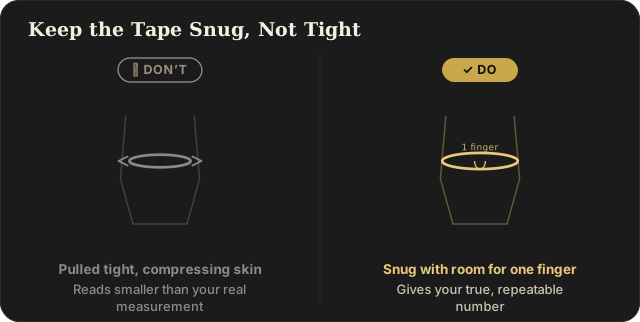
- Pulling the tape too tight. Snug is correct; compressing the skin isn't. You should be able to slide one finger under the tape.
- Mixing units mid-measurement. Measuring your bust in inches and your waist in centimeters, even by accident, will break any calculator's result. Pick one unit and stay consistent.
Inches to Centimeters Conversion Reference
If your tape only shows one unit and you need the other: multiply inches by 2.54 to get centimeters, or multiply centimeters by 0.394 to get inches. A quick reference for common measurement ranges:
| Inches | Centimeters |
|---|---|
| 24 in | 61.0 cm |
| 28 in | 71.1 cm |
| 32 in | 81.3 cm |
| 36 in | 91.4 cm |
| 40 in | 101.6 cm |
| 44 in | 111.8 cm |
| 48 in | 121.9 cm |
Most modern fabric tape measures print both units on opposite edges, which sidesteps the conversion entirely — worth checking before you start. The body visualizer also has an in / lb switch and converts everything for you, so you can enter measurements in whichever unit your tape shows.
Frequently Asked Questions
How often should I re-measure?
Every six months is enough for most people, or after a significant change — a shift in weight, a new training programme, pregnancy, or a hormonal transition such as perimenopause. Measuring more often mostly captures normal daily fluctuation rather than a real change in your proportions.
Should I measure first thing in the morning?
It's a reasonable default for consistency, since bloating and fluid retention shift slightly over the day, but the more important habit is measuring at roughly the same time and in the same way each time — whichever time you pick — so your results are comparable to each other.
Does it matter if I measure over clothes?
Yes — bulky clothing adds false inches, and different outfits add different amounts, which makes results inconsistent between sessions. Bare skin or thin, form-fitting clothing gives the most accurate and repeatable reading.
Why do my measurements seem different every time I check?
Small day-to-day shifts are normal — hydration, food intake, time of day, and even how snug the tape was pulled all move the number slightly. If two measurements taken minutes apart differ by more than half an inch, the more likely explanation is technique (tape angle, posture, tension) rather than a real physical change.
Can someone else's measurements help me measure myself?
Not directly, but having someone else take your measurements — waist and hips especially — is more reliable than doing it entirely alone, since they can see the back of the tape and keep it level in places you can't check in a mirror.
Getting the technique right takes a few extra minutes the first time, and after that it's mostly muscle memory. Once you've got clean numbers, they're reusable across every calculator on this site rather than something to redo from scratch each time.
This guide is for general measurement technique only. It does not diagnose any medical condition and isn't a substitute for advice from a qualified healthcare professional.