Quick answer: adults need about 25 g of fiber a day (women) and 38 g (men) up to age 50, and 21 g and 30 g after 50. Another rule is 14 g per 1,000 calories. Most Americans eat only about 15 g.
Daily Fiber Intake by Age and Sex
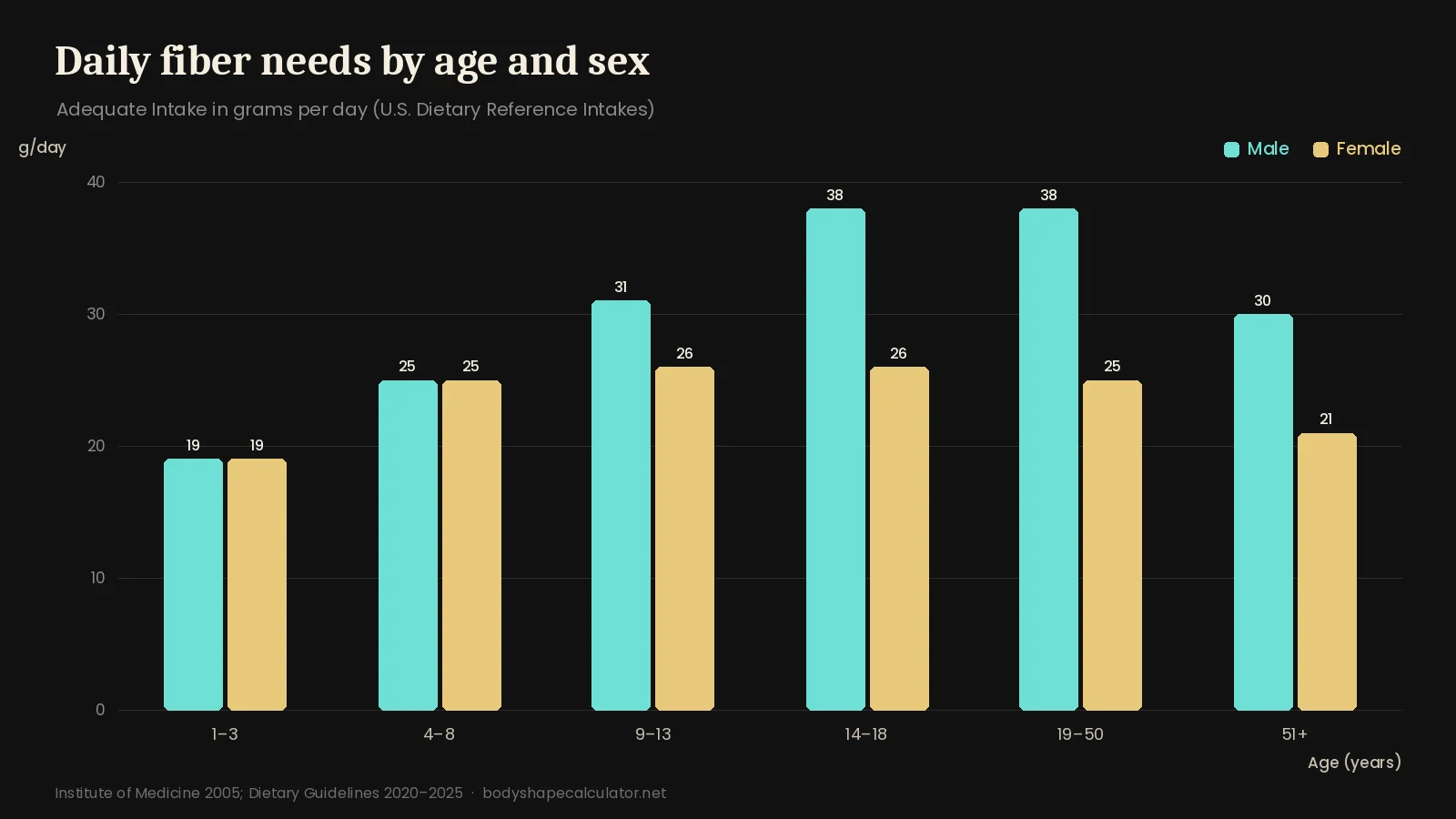
| Age | Men / boys | Women / girls |
|---|---|---|
| 1–3 | 19 | 19 |
| 4–8 | 25 | 25 |
| 9–13 | 31 | 26 |
| 14–18 | 38 | 26 |
| 19–50 | 38 | 25 |
| 51+ | 30 | 21 |
| Pregnancy | — | 28 |
| Breastfeeding | — | 29 |
High-Fiber Foods
| Food | Serving | Fiber |
|---|---|---|
| Split peas, cooked | 1 cup | 16 g |
| Lentils, cooked | 1 cup | 15.5 g |
| Black beans, cooked | 1 cup | 15 g |
| Chia seeds | 2 tbsp | 8 g |
| Raspberries | 1 cup | 8 g |
| Pear, with skin | 1 medium | 5.5 g |
| Oats, dry | ½ cup | 4 g |
| Broccoli, cooked | 1 cup | 5 g |
| Avocado | ½ | 5 g |
| Whole-wheat bread | 1 slice | 2–3 g |
Why Fiber Matters
Higher fiber intake is linked with lower risk of heart disease, type 2 diabetes and colorectal cancer, and with lower body weight. A large review for the World Health Organization found the biggest benefits at 25–29 g a day or more. Fiber feeds gut bacteria, slows sugar absorption and helps you feel full, which makes it useful for fat loss too (see the macro calculator).
How to Eat More Fiber
Add 3–5 g a day each week rather than all at once, and drink more water as you do (see the water intake calculator). Easy swaps: whole grains for refined, beans in soups and salads, fruit with the skin on, a handful of nuts or seeds, and vegetables at two meals a day.
Fiber FAQ
How much fiber do I need a day?
Women 19–50 need about 25 g and men 38 g; after 50, 21 g for women and 30 g for men. Or aim for 14 g per 1,000 calories you eat.
What happens if I eat too little fiber?
Common effects are constipation and feeling less full after meals. Long term, low fiber intake is linked with higher risk of heart disease, diabetes and colon cancer.
Can you eat too much fiber?
Very high amounts, especially added quickly, can cause bloating, gas and cramps. Over about 70 g a day may reduce absorption of some minerals.
Do fiber supplements count?
Yes, they add to your total, but whole foods also provide vitamins, minerals and a mix of fiber types, so get most fiber from food.
What foods are highest in fiber?
Beans, lentils and split peas lead, followed by chia seeds, raspberries, pears, artichokes, oats and whole grains.
Sources
- Institute of Medicine. Dietary Reference Intakes for Energy, Carbohydrate, Fiber, Fat, Fatty Acids, Cholesterol, Protein, and Amino Acids. 2005.
- U.S. Department of Agriculture and HHS. Dietary Guidelines for Americans, 2020–2025.
- Reynolds A, et al. Carbohydrate quality and human health: a series of systematic reviews and meta-analyses. The Lancet. 2019;393(10170):434–445.
- USDA FoodData Central (fiber values).
For general information for healthy adults. It is not medical advice; talk to a doctor before starting a new exercise or diet plan if you have a health condition.